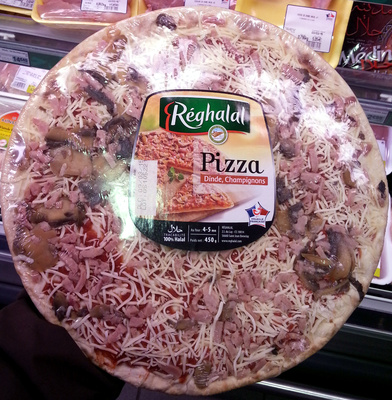
Pizza Turkey Champignons
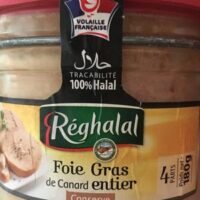
Halal, Contrôle from La mosquée d’Évry-Courcouronnes, Traçabilité 100 % Halal
- Estimated Delivery : Up to 4 business days
- Free Shipping & Returns : On all orders over $200
Description
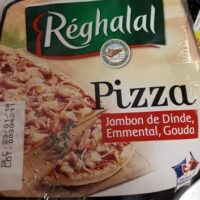
Pizza Turkey Champignons
Pizza jambon from Turkey standard cuit Halal and with champignons
Barcode: 3283040313461
Certified as: Halal, Contrôle from La mosquée d’Évry-Courcouronnes, Traçabilité 100 % Halal
Ingredients: pâte cuite 39% (Corn Flour, Water, Salt, Colza Oil, Powder à lever : e500 (E500 (i) – Sodium carbonate: Sodium carbonate is naturally occurring in alkaline waters, however it is also synthesised by the Solvay process or by electrolysis of sea water. Sodium carbonate is used as an acidity regulator, particularly in beer making. Excessive ingestion may result in stomach upset. Typical products include beer, baking, soft and fizzy Drink s, medications. No known adverse effects in small quantities. May irritate the eyes and respiratory tract), Yeast), Tomato Sauce cuite 25% (purée from Tomato mi-réduite, Corn Flour, Oil d’olive Extra Virgin, Water, pulpe d’ail, Basil, Oregano), jambon from Turkey standard cuit Halal 12.2% (Meat Red from Turkey sans peau 8.1%, Water, Starch from Maize, Antioxidants : E325 and E301, Salt, Dextrose, Wheat Protein, Aromas, Stabilizers : E450 and E451, Thickener : e407 (A natural polysaccharide, produced by different seaweeds (Chrondrus crispus, Gigartina stellata, Euchema spinosum, E. cottonii) in Europe, Asia and America. It is complex mixture of polysaccharides. E407a has slightly different composition; moreover, it contains considerable amount of cellulose. Side effects: None known in the concentrations used, although high concentrations bring about flatulence and bloating, due to fermentation by the intestinal microflora (in the same way as all indigestible polysaccharides). Short-chain carrageenans may cause intestinal leakage and are not permitted for use in foods), Preservatives : E250), Mushrooms 12.2% (Mushrooms from Paris, Water, Salt, Acidifiant : E330 (Citric Acid E330 is monohydrate citric acid and is sour, white crystalline powder that is 99.5-101.0%. It is used as an acidulant, flavoring agent, preservative and anti-staling agent in food and beverage products. It can also be used to reduce pH in canned foods), (Citric Acid E330 (Citric Acid E330 is monohydrate citric acid and is sour, white crystalline powder that is 99.5-101.0%. It is used as an acidulant, flavoring agent, preservative and anti-staling agent in food and beverage products. It can also be used to reduce pH in canned foods), is monohydrate citric acid and is sour, white crystalline powder that is 99.5-101.0%. It is used as an acidulant, flavoring agent, preservative and anti-staling agent in food and beverage products. It can also be used to reduce pH in canned foods), antioxydant : E300), Emmental (dont Starch from Apple), Oregano, Basil.
Shipped from: France – France
Manufacturer:
RégHalal
Available at the following stores: Grand Frais
Weight: 450 g
Serving size:
Food Traces: Gluten, Milk
Number of additives / E-numbers: 9 – e250 (Sodium nitrite (food additive E250) is used in the food industry as color fixer and preservative clamp in meat and fish products. Chemical formula of sodium nitrite is: NaNO2. In pure form the additive E250 represents white hygroscopic crystal powder with slightly yellowish shade. Sodium nitrite is well dissolved in water. On air the additive E250 is exposed to slow oxidation with formation of sodium nitrate (NaNO3). Industrial use of sodium nitrite began in 1906 when its positive properties were discovered at production of meat products and it was approved for the first time as food additive. Now for receiving sodium nitrite in industrial production the reaction of interaction of compounds of sodium with the connections containing nitrite ion in the water environment is applied. The deposit is received during reaction, is evaporated and cooled. The received white powder also is E250 additive preservative. Sodium nitrite is very toxic substance. The lethal dose for the person makes from 2 to 6 grams depending on the organism structure. The wrong use of food additive E250 while production of meat or fish food can cause serious Peasonings therefore the sodium nitrite is used in mixture with food salt),e300,e301,e325,e330 (Citric acid is compound found in every living organism, as it is part of the key metabolic pathways in all body cells. Large concentrations are found in citrus Fruits, kiwi, strawberries and many other Fruits. It is commercially prepared by fermentation of molasses with the mould Aspergillus niger. Citric acid has many functions – it enhances the activity of many antioxidants, but is no antioxidant by itself. It is mainly used as an acidity regulator as well as aroma compound. It increases gel strength in marmalades and decreases enzymatic browning in Fruits and Fruit products. Citric acid and citrates can normally be consumed by Muslims, Vegans and Vegetarians. Citric acid does not cause allergic reactions in people who are allergic to oranges and citrus Fruits, as it is commercially made from sugar, not Fruits.), e407 (A natural polysaccharide, produced by different seaweeds (Chrondrus crispus, Gigartina stellata, Euchema spinosum, E. cottonii) in Europe, Asia and America. It is complex mixture of polysaccharides. E407a has slightly different composition; moreover, it contains considerable amount of cellulose. Side effects: None known in the concentrations used, although high concentrations bring about flatulence and bloating, due to fermentation by the intestinal microflora (in the same way as all indigestible polysaccharides). Short-chain carrageenans may cause intestinal leakage and are not permitted for use in foods),e450 (Sodium pyrophosphate or E450 (a) is food additive. It is used in the food industry as an emulsifier, pH buffering agent and thickener. This product is very alkaline and should be handled with care. Sodium acid pyrophosphate (SAPP), or disodium dihydrogen pyrophosphate, its food grade is commonly used with sodium bicarbonate as leavening agent in bakery products; also, it maintains the color in processed potatoes and also prevents struvite crystal in canned Seafood. The European food additive number for it is E450(i). Generally, it is vegan and gluten free. SAPP can be used to replace sulfur dioxide, sulfites and bisulfites to maintain the appearance and texture of cooked potato products. The application of SAPP reduces the dark color from after-cooking darkening in cooked and processed potato products, such as in oil-blanched french fries and potato salad),e451,e500
National Nutrition Category: Composite Foods / Pizza Pies and Quiche
Nutrition Facts:
- Contains alcohol (ingredient: gin)
Halal Status



- pâte cuite 39 %
- — farine de blé 26.6 % (estimate)
- — eau 6.2 % (estimate)
- — sel 0.7 % (estimate)
- — huile de colza 0.7 % (estimate)
- — poudre à lever 0.7 % (estimate)
- — — e500 0.7 % (estimate)
- — levure 4.2 % (estimate)
- sauce tomate cuite 25 %
- — purée de tomate mi-réduite 14.3 % (estimate)
- — farine de blé 5.4 % (estimate)
- — huile d'olive vierge extra 2.7 % (estimate)
- — eau 1.3 % (estimate)
- — pulpe d'ail 0.7 % (estimate)
- — basilic 0.3 % (estimate)
- — origan 0.3 % (estimate)
- jambon de dinde standard cuit 12.2 %
- — viande rouge de dinde sans peau 8.1 %
- — eau 2.2 % (estimate)
- — amidon de maïs 0.9 % (estimate)
- — antioxydants 0.5 % (estimate)
- — — e325 0.5 % (estimate)
- — e301 0.2 % (estimate)
- — sel 0.1 % (estimate)
- — dextrose 0.1 % (estimate)
- — protéines de blé 0 % (estimate)
- — arômes 0 % (estimate)
- — stabilisants 0 % (estimate)
- — — e450 0 % (estimate)
- — e451 0 % (estimate)
- — épaississant 0 % (estimate)
- — — e407 0 % (estimate)
- — conservateur 0 % (estimate)
- — — e250 0 % (estimate)
- champignons 12.2 %
- — champignons de Paris 7.3 % (estimate)
- — eau 2.4 % (estimate)
- — sel 0.7 % (estimate)
- — acidifiant 0.7 % (estimate)
- — — e330 0.7 % (estimate)
- — antioxydant 1.1 % (estimate)
- — — e300 1.1 % (estimate)
- emmental 5.9 % (estimate)
- — dont fécule de pomme de terre 5.9 % (estimate)
- origan 3.4 % (estimate)
- basilic 2.3 % (estimate)
| Energy | 849 kJ |
|---|---|
| – kcal | |
| Fat | 4.8 g |
| Saturated fat | 2.1 g |
| Carbohydrates | 29.1 g |
| Sugars | 1.9 g |
| Fiber | 1.7 g |
| Proteins | 9.7 g |
| Salt | 1.4 g |
| Fruits, vegetables & nuts (estimate) | 36.9 % |
Related Food Products


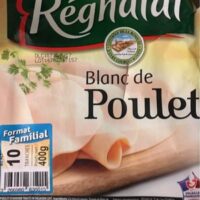
White Chicken
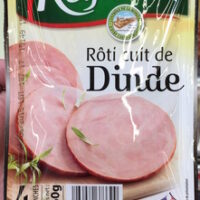
€4,72Rôti cuit from Turkey
€4,84
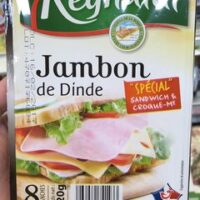
Ham from Turkey
€4,73