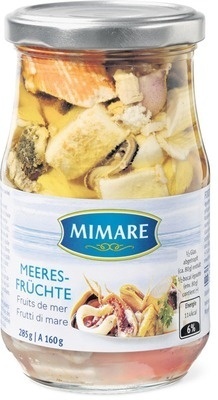
Fruits from Mer
- Estimated Delivery : Up to 4 business days
- Free Shipping & Returns : On all orders over $200
Description
Fruits from Mer
Barcode: 7613269331452
Certified as:
Ingredients: Oil d’olive 41 %, encornet géant (Dosidicus gigas) 36 %, produit à base from Poisson (Surimi) 11% (cohana (Nemipterus spp), Sugar, Stabilizers: E450, E451, Water, Starch Corn, Starch from Apples from Earth, white d’oeuf (d’élevage sol), Sunflower Oil, Salt, sorbitol, Fibers Corn, Aroma from Crabe, exhausteur from Goût: glutamate monosodique, Food Colorings: E160c and E171], moules (Mytilus chilensis) 7 %, poulpes (Octopus vulgaris) 2 %, Vinegar from vin (contains des sulfites), Sugar, Salt, Preservativess: E202 (Potassium sorbate is the potassium salt of sorbic acid, is white salt that is very soluble in water (58.2% at 20 °C). It is primarily used as food preservative), E211 (Sodium benzoate is the first preservative the FDA allowed in foods and still widely used food additive. … For example, it’s listed as E211 in European food products (5). Sodium benzoate inhibits the growth of potentially harmful bacteria, mold, and other microbes in food, thus deterring spoilage. While sodium benzoate is considered safe, scientists have shown that negative side effects occur when it’s mixed with ascorbic acid (vitamin C). Their studies indicate that it then turns into benzene, known carcinogen that may cause cancer. People who drank beverages containing high levels of sodium benzoate — like soda — reported an increase in attention-deficit/hyperactivity disorder (ADHD) symptoms), Acidifiant: Citric Acid.
Shipped from: Switzerland
Manufacturer:
Mimare Italian
Available at the following stores: Migros
Weight: 160 g
Serving size: 80 g
Food Traces: /
Number of additives / E-numbers: 9 – e160c,e171,e202 (Potassium sorbate, the potassium salt of sorbic acid, is commonly used preservative in food with the European food additive number E202. Generally, it is synthetic, vegan and gluten-free), e211,e330 (Citric acid is compound found in every living organism, as it is part of the key metabolic pathways in all body cells. Large concentrations are found in citrus Fruits, kiwi, strawberries and many other Fruits. It is commercially prepared by fermentation of molasses with the mould Aspergillus niger. Citric acid has many functions – it enhances the activity of many antioxidants, but is no antioxidant by itself. It is mainly used as an acidity regulator as well as aroma compound. It increases gel strength in marmalades and decreases enzymatic browning in Fruits and Fruit products. Citric acid and citrates can normally be consumed by Muslims, Vegans and Vegetarians. Citric acid does not cause allergic reactions in people who are allergic to oranges and citrus Fruits, as it is commercially made from sugar, not Fruits.), e420 (E420(i) and E420(ii) are food additives approved by the EU (European Union) and used as natural sweeteners in food and Drink products. The common names for E420(i) and E420(ii) are sorbitol, and sorbitol syrup, respectively. These sweeteners are natural carbohydrate alcohols obtained from berries. They can also be produced synthetically from glucose. These low calorie sweeteners are also used as bulking agents and stabilisers. E420 is absorbed by the body. Some of it is metabolised as fructose, while the rest undergoes fermentation in the large intestine. E420 may cause diarrhoea in infants younger than one year. These sweeteners may also cause flatulence, due to gases released during fermentation),e420i,e450 (Sodium pyrophosphate or E450 (a) is food additive. It is used in the food industry as an emulsifier, pH buffering agent and thickener. This product is very alkaline and should be handled with care. Sodium acid pyrophosphate (SAPP), or disodium dihydrogen pyrophosphate, its food grade is commonly used with sodium bicarbonate as leavening agent in bakery products; also, it maintains the color in processed potatoes and also prevents struvite crystal in canned Seafood. The European food additive number for it is E450(i). Generally, it is vegan and gluten free. SAPP can be used to replace sulfur dioxide, sulfites and bisulfites to maintain the appearance and texture of cooked potato products. The application of SAPP reduces the dark color from after-cooking darkening in cooked and processed potato products, such as in oil-blanched french fries and potato salad),e451,e621
National Nutrition Category: Fish Meat Eggs / Fish and Seafood
Nutrition Facts:
- Contains alcohol (ingredient: wine)
Halal Status



- Huile d'olive 41 %
- encornet géant 36 %
- — Dosidicus gigas 36 % (estimate)
- produit à base de poisson 11 %
- — Surimi 11 % (estimate)
- cohana 6 % (estimate)
- — Nemipterus spp 6 % (estimate)
- sucre 3 % (estimate)
- stabilisants 1.5 % (estimate)
- — e450 1.5 % (estimate)
- e451 0.8 % (estimate)
- eau 0.4 % (estimate)
- amidon de blé 0.2 % (estimate)
- fécule de pommes de terre 0.1 % (estimate)
- blanc d'oeuf 0 % (estimate)
- — d'élevage au sol 0 % (estimate)
- huile de tournesol 0 % (estimate)
- sel de cuisine 0 % (estimate)
- sorbitol 0 % (estimate)
- fibres de blé 0 % (estimate)
- arôme de crabe 0 % (estimate)
- exhausteur de goût 0 % (estimate)
- — glutamate monosodique 0 % (estimate)
- colorants 0 % (estimate)
- — e160c 0 % (estimate)
- e171 0 % (estimate)
- moules 7 %
- — Mytilus chilensis 0 % (estimate)
- poulpes 2 %
- — Octopus vulgaris 0 % (estimate)
- vinaigre de vin 0 % (estimate)
- sucre 0 % (estimate)
- sel de cuisine 0 % (estimate)
- conservateurs 0 % (estimate)
- — e202 0 % (estimate)
- e211 0 % (estimate)
- acidifiant 0 % (estimate)
- — acide citrique 0 % (estimate)
| Energy | 600 kJ |
|---|---|
| – kcal | |
| Fat | 6 g |
| Saturated fat | 1 g |
| Carbohydrates | 7 g |
| Sugars | 2 g |
| Fiber | 0.5 g |
| Proteins | 15 g |
| Salt | 2.2 g |
| Fruits, vegetables & nuts (estimate) | 41 % |
Related Food Products

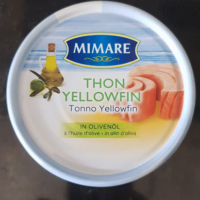
Thon yellowfin
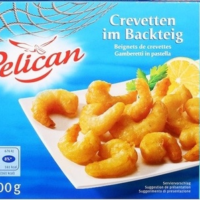
€1,75Beignets from Crevettes
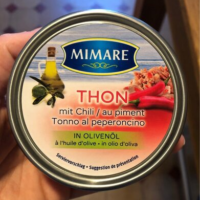
€2,48Thon Chili Peppers
€2,99Filets from Salmon
€11,95Filet from Sardine
€2,48Thon Basil
€2,99Smoked Salmon
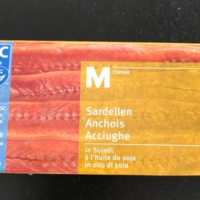
€11,95Filets d’anchois
€2,65
Shrimp Dim Sum
€3,99