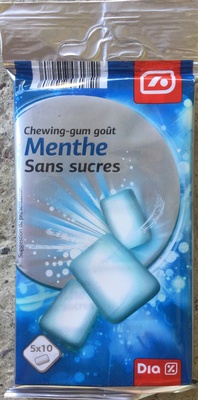
Chewing-Gum menthe sans Sugars
chewing-Gum sans Sugars with edulcorants, Taste menthe
- Estimated Delivery : Up to 4 business days
- Free Shipping & Returns : On all orders over $200
Description
Chewing-Gum menthe sans Sugars
chewing-Gum sans Sugars with edulcorants, Taste menthe
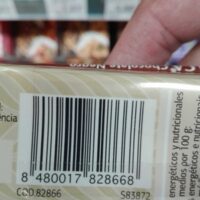
Barcode: 8480017061751
Certified as:
Ingredients: édulcorants (Maltitol, sorbitol), gomme from Base, édulcorant (xylitol), agent from Charge (Carbonates from Calcium), Aromas, agent from Charge (orthophosphate dicalcique), édulcorant (Syrup from Maltitol), Stabilizer (E414), Food Coloring (E171), Corrector d’Acidit (Carbonate Acide from Sodium), édulcorant (aspartame, acesulfame-K), Emulsifier (lécithine from Tournesol), exhausteur from Flavor (acétate from zinc), agent d’enrobage (E903)
Shipped from: France – France
Manufacturer:
Dia Gumlink Confectionery A/S,Union Européenne
Available at the following stores: Dia
Weight: 70g, 5×10 cachets
Serving size:
Food Traces:
Number of additives / E-numbers: 12 – e171,e322 (Soy lecithin E322 is generally safe food additive. Because it’s present in such small amounts in food, it’s unlikely to be harmful. Though evidence supporting soy lecithin as supplement is somewhat limited, the evidence backing choline could steer people toward this food additive in supplement form),e322i (Some Lecithin contains egg yolks so not suitable for Vegans. Other main sources of Lecithin are from soya Bean oil and is likely to be genetically modified if sourced from countries such as the US. Lecithin can also be directly obtained from animal fat),e414,e420 (E420(i) and E420(ii) are food additives approved by the EU (European Union) and used as natural sweeteners in food and Drink products. The common names for E420(i) and E420(ii) are sorbitol, and sorbitol syrup, respectively. These sweeteners are natural carbohydrate alcohols obtained from berries. They can also be produced synthetically from glucose. These low calorie sweeteners are also used as bulking agents and stabilisers. E420 is absorbed by the body. Some of it is metabolised as fructose, while the rest undergoes fermentation in the large intestine. E420 may cause diarrhoea in infants younger than one year. These sweeteners may also cause flatulence, due to gases released during fermentation),e420i,e500 (E500 (i) – Sodium carbonate: Sodium carbonate is naturally occurring in alkaline waters, however it is also synthesised by the Solvay process or by electrolysis of sea water. Sodium carbonate is used as an acidity regulator, particularly in beer making. Excessive ingestion may result in stomach upset. Typical products include beer, baking, soft and fizzy Drink s, medications. No known adverse effects in small quantities. May irritate the eyes and respiratory tract),e500ii,e650,e903,e950,e951 (Aspartame is an artificial non-saccharide sweetener 200 times sweeter than sucrose, and is commonly used as sugar substitute in foods and beverages. It is methyl ester of the aspartic acid/phenylalanine dipeptide with the trade names NutraSweet, Equal, and Canderel. Aspartame was first made in 1965 and approved for use in food products by the United States Food and Drug Administration (FDA) in 1981. Many aspects of industrial synthesis of aspartame were established by Ajinomoto. In 2004, the market for aspartame, in which Ajinomoto, the world’s largest aspartame manufacturer, had 40 percent share, was 14,000 metric tons year, and consumption of the product was rising by 2 percent year. Ajinomoto acquired its aspartame business in 2000 from Monsanto for $67M. Because sucralose, unlike aspartame, retains its sweetness after being heated, and has at least twice the shelf life of aspartame, it has become more popular as an ingredient. This, along with differences in marketing and changing consumer preferences, caused aspartame to lose market share to sucralose. In 2004, aspartame traded at about $30/kg and sucralose, which is roughly three times sweeter by weight, at around $300/kg),e965,e965ii,e967
National Nutrition Category: Sugary Snacks / Sweets
Nutrition Facts:
Brand
Dia

Halal Status


 ,
, 
- édulcorants 53.6 % (estimate)
- — maltitol 28.6 % (estimate)
- — sorbitol 25 % (estimate)
- gomme de base 23.2 % (estimate)
- édulcorant 11.6 % (estimate)
- — xylitol 11.6 % (estimate)
- agent de charge 5.8 % (estimate)
- — carbonates de calcium 5.8 % (estimate)
- arômes 2.5 % (estimate)
- agent de charge 1.7 % (estimate)
- — orthophosphate dicalcique 1.7 % (estimate)
- édulcorant 0.8 % (estimate)
- — sirop de maltitol 0.8 % (estimate)
- stabilisant 0.4 % (estimate)
- — e414 0.4 % (estimate)
- colorant 0.2 % (estimate)
- — e171 0.2 % (estimate)
- correcteur d'acidité 0.1 % (estimate)
- — carbonate acide de sodium 0.1 % (estimate)
- édulcorant 0.1 % (estimate)
- — aspartame 0 % (estimate)
- — acesulfame-K 0 % (estimate)
- émulsifiant 0 % (estimate)
- — lécithine de tournesol 0 % (estimate)
- exhausteur de goût 0 % (estimate)
- — acétate de zinc 0 % (estimate)
- agent d'enrobage 0 % (estimate)
- — e903 0 % (estimate)
| Energy | 601 kJ |
|---|---|
| – kcal | |
| Fat | 0 g |
| Saturated fat | 0 g |
| Carbohydrates | 61 g |
| Sugars | – g |
| Fiber | 0 g |
| Proteins | 0 g |
| Salt | 0 g |
| Fruits, vegetables & nuts (estimate) | 0 % |
Related Food Products

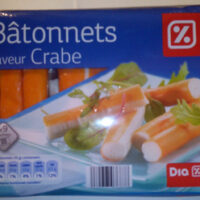
Bâtonnets Flavour crabe
€2,50Rosquillas
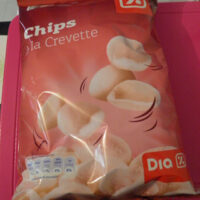
€2,50Chips Crevette
€2,51
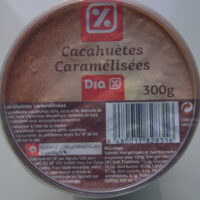
Peanuts caramélisées
€2,50Chocolate White
€2,50Flan Nature
€2,52Digestive
€2,50
Brioche
€2,50
Chocolate with Leche
€2,50Palmeritas from Hojaldre
€2,50