Délice from Chicken
Halal
- Estimated Delivery : Up to 4 business days
- Free Shipping & Returns : On all orders over $200
Description
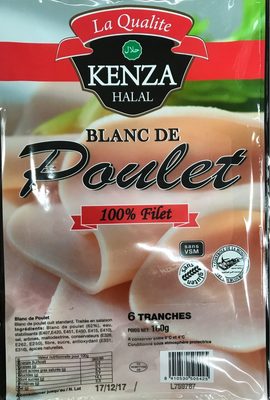
Délice from Chicken
Barcode: 8410530505425
Certified as: Halal
Ingredients: White Chicken (62%), Water, Stabilizers (e407 (A natural polysaccharide, produced by different seaweeds (Chrondrus crispus, Gigartina stellata, Euchema spinosum, E. cottonii) in Europe, Asia and America. It is complex mixture of polysaccharides. E407a has slightly different composition; moreover, it contains considerable amount of cellulose. Side effects: None known in the concentrations used, although high concentrations bring about flatulence and bloating, due to fermentation by the intestinal microflora (in the same way as all indigestible polysaccharides). Short-chain carrageenans may cause intestinal leakage and are not permitted for use in foods),E420, E451, E450, E415 (For most people, the Only potential negative side effect of xanthan gum E415 appears to be an upset stomach. Many animal studies have found that large doses can increase the frequency of stools and cause soft stools) (For most people, the Only potential negative side effect of xanthan gum E415 (For most people, the Only potential negative side effect of xanthan gum E415 appears to be an upset stomach. Many animal studies have found that large doses can increase the frequency of stools and cause soft stools) appears to be an upset stomach. Many animal studies have found that large doses can increase the frequency of stools and cause soft stools), E410), Salt, Aromas, Maltodextrine, Preservativess (E326, E262, E250), fibre, Sugar, antioxydant (E3311 E316), Spices Naturelles.
Shipped from: France – France
Manufacturer:
Isla delice
Available at the following stores:
Weight: 160 g
Serving size:
Food Traces:
Number of additives / E-numbers: 10 – e250 (Sodium nitrite (food additive E250) is used in the food industry as color fixer and preservative clamp in meat and fish products. Chemical formula of sodium nitrite is: NaNO2. In pure form the additive E250 represents white hygroscopic crystal powder with slightly yellowish shade. Sodium nitrite is well dissolved in water. On air the additive E250 is exposed to slow oxidation with formation of sodium nitrate (NaNO3). Industrial use of sodium nitrite began in 1906 when its positive properties were discovered at production of meat products and it was approved for the first time as food additive. Now for receiving sodium nitrite in industrial production the reaction of interaction of compounds of sodium with the connections containing nitrite ion in the water environment is applied. The deposit is received during reaction, is evaporated and cooled. The received white powder also is E250 additive preservative. Sodium nitrite is very toxic substance. The lethal dose for the person makes from 2 to 6 grams depending on the organism structure. The wrong use of food additive E250 while production of meat or fish food can cause serious Peasonings therefore the sodium nitrite is used in mixture with food salt),e262 (Sodium acetate may be added to food as seasoning, sometimes in the form of sodium diacetate, one-to-one complex of sodium acetate and acetic acid, given the E-number E262. It is often used to give potato Chips salt and vinegar flavor),e316 (It is the sodium salt of erythorbic acid, stereoisomer of sodium ascorbate. Likewise, it is used as an antioxidant, preservative and curing accelerator in meat and fish products. The European food additive number for it is E316. Sodium erythorbate is used primarily to bring out nice red color in meat or fish products as it can accelerate the reduction of nitrite & nitrate to nitric oxide which generates the pink colour in meat.),e326,e407 (A natural polysaccharide, produced by different seaweeds (Chrondrus crispus, Gigartina stellata, Euchema spinosum, E. cottonii) in Europe, Asia and America. It is complex mixture of polysaccharides. E407a has slightly different composition; moreover, it contains considerable amount of cellulose. Side effects: None known in the concentrations used, although high concentrations bring about flatulence and bloating, due to fermentation by the intestinal microflora (in the same way as all indigestible polysaccharides). Short-chain carrageenans may cause intestinal leakage and are not permitted for use in foods),e410,e415,e420 (E420(i) and E420(ii) are food additives approved by the EU (European Union) and used as natural sweeteners in food and Drink products. The common names for E420(i) and E420(ii) are sorbitol, and sorbitol syrup, respectively. These sweeteners are natural carbohydrate alcohols obtained from berries. They can also be produced synthetically from glucose. These low calorie sweeteners are also used as bulking agents and stabilisers. E420 is absorbed by the body. Some of it is metabolised as fructose, while the rest undergoes fermentation in the large intestine. E420 may cause diarrhoea in infants younger than one year. These sweeteners may also cause flatulence, due to gases released during fermentation),e450 (Sodium pyrophosphate or E450 (a) is food additive. It is used in the food industry as an emulsifier, pH buffering agent and thickener. This product is very alkaline and should be handled with care. Sodium acid pyrophosphate (SAPP), or disodium dihydrogen pyrophosphate, its food grade is commonly used with sodium bicarbonate as leavening agent in bakery products; also, it maintains the color in processed potatoes and also prevents struvite crystal in canned Seafood. The European food additive number for it is E450(i). Generally, it is vegan and gluten free. SAPP can be used to replace sulfur dioxide, sulfites and bisulfites to maintain the appearance and texture of cooked potato products. The application of SAPP reduces the dark color from after-cooking darkening in cooked and processed potato products, such as in oil-blanched french fries and potato salad),e451
National Nutrition Category: Unknown
Nutrition Facts:
Brand
Isla Delice

- Meat category: Meats-and-their-products
Halal Status





- Blanc de poulet 62 %
- eau 20.9 % (estimate)
- stabilisants 8.6 % (estimate)
- — e407 4.3 % (estimate)
- — e420 2.1 % (estimate)
- — e451 1.1 % (estimate)
- — e450 0.5 % (estimate)
- — e415 0.3 % (estimate)
- — e410 0.3 % (estimate)
- sel 1.2 % (estimate)
- arômes 1.2 % (estimate)
- maltodextrine 1.2 % (estimate)
- conservateurs 1.2 % (estimate)
- — e326 0.6 % (estimate)
- — e262 0.3 % (estimate)
- — e250 0.3 % (estimate)
- fibre 1.2 % (estimate)
- sucre 0.4 % (estimate)
- antioxydant 0.4 % (estimate)
- — e3311 0.2 % (estimate)
- — e316 0.2 % (estimate)
- épices naturelles 2.1 % (estimate)
| Energy | – kJ |
|---|---|
| 86 kcal | |
| Fat | 0.5 g |
| Saturated fat | 0.1 g |
| Carbohydrates | 6.3 g |
| Sugars | 0.7 g |
| Fiber | – g |
| Proteins | 14.1 g |
| Salt | 2.3 g |
| Fruits, vegetables & nuts (estimate) | 0 % |
Related Food Products

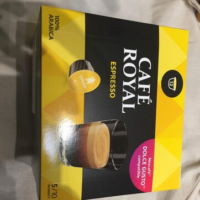
Espresso
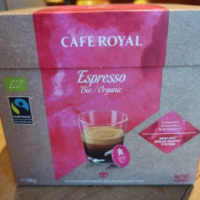
€3,49Espresso Bio/organic
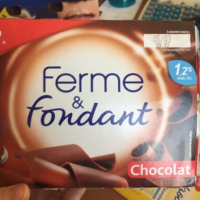
€3,49Sveltesse F&F choco
€1,58
Nescafe Special Crema
€6,98Espresso Intenso
€2,56Chocolate Whoppers
€1,68
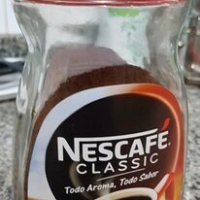
Nescafe Classic
€2,56Cappuccino
€3,89Café with Leche
€3,45Shin Ramyun Noodles
€3,18Ristretto string édition
€3,49Caffè Lungo
€3,89